Anker Power Bank Review: Best Portable Charging Solution in 2026?
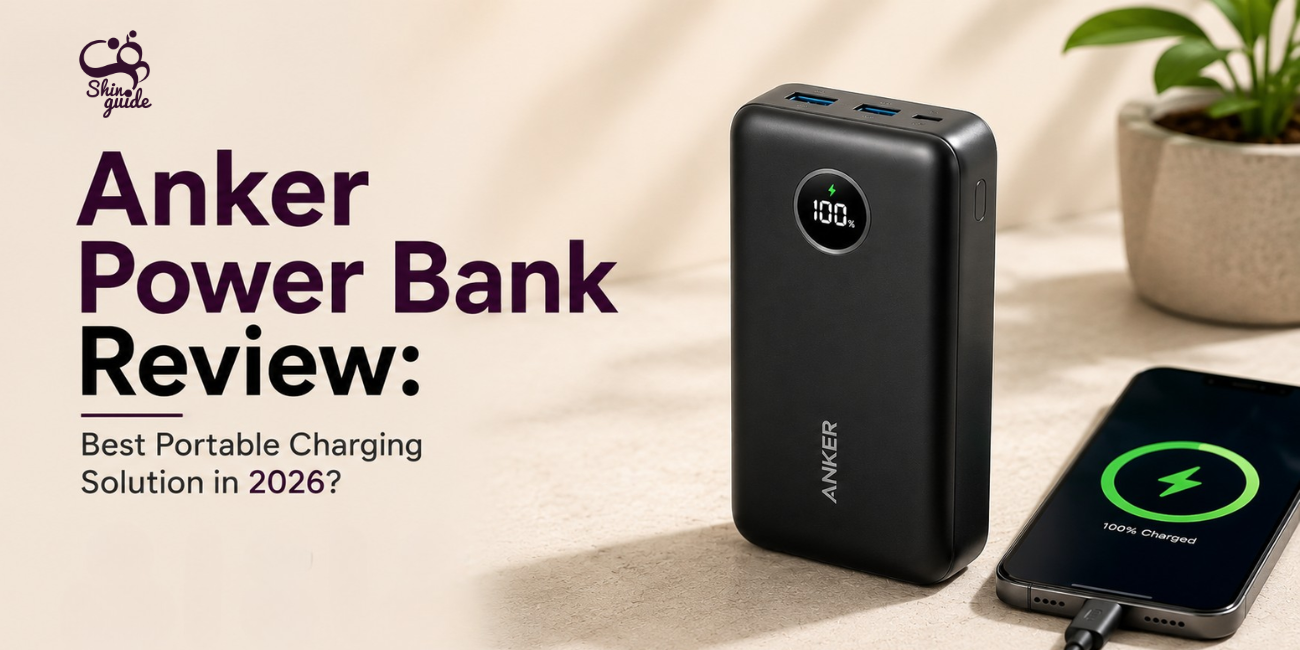
Portable chargers are no longer just travel accessories in 2026. Between smartphones, tablets, wireless earbuds, smartwatches, handheld gaming devices, and laptops, most people now depend on portable charging almost every day. That’s exactly why the Anker Power Bank Review discussion continues to dominate tech conversations online.
Anker has built a strong reputation by focusing on dependable charging performance, good battery efficiency, fast charging support, and long-term durability rather than competing only on low prices. But with newer brands offering cheaper alternatives, many buyers are asking the same question: Is Anker still the best portable charging solution in 2026?
For most users, the answer is still yes. However, choosing the right Anker power bank depends heavily on your daily usage, travel habits, and the types of devices you charge regularly. Some models are perfect for simple phone charging, while others are powerful enough to charge laptops and multiple devices at once. This guide breaks everything down in a simple, practical way so you can decide whether an Anker power bank is actually worth buying in 2026.
Best Offers Right Now
The best value categories usually depend on how you plan to use the power bank.
- 10,000mAh models are ideal for lightweight portability and emergency daily charging.
- 20,000mAh models offer the best overall balance between size, battery life, and charging flexibility.
- 24,000mAh+ premium models are better suited for laptop users, travelers, and heavy multi-device charging.
The strongest deals usually appear during seasonal tech sales, bundle promotions, and major shopping events.
Why Anker Power Banks Are So Popular
Anker became popular because it consistently delivers reliable charging performance without making things unnecessarily complicated. While many low-cost brands focus mainly on large battery numbers, Anker focuses more on real-world usability. That difference matters more than many people expect. A cheaper power bank may work initially, but issues like inconsistent charging speed, overheating, weak ports, poor efficiency, and shorter lifespan become frustrating over time. Anker products are designed to reduce those problems. In 2026, the lineup includes compact portable chargers, high-capacity laptop chargers, magnetic wireless charging models, and newer designs with built-in cables. This variety is one reason Anker remains one of the safest recommendations for most buyers. The company also performs well in charging consistency. Instead of delivering unstable peak speeds for short periods, Anker models usually maintain stable charging over longer sessions. That creates a much better everyday experience.
Design & Build Quality
One area where Anker continues to perform well is build quality. Their products generally feel durable, clean, and practical rather than flashy. Most models use matte finishes that resist fingerprints and scratches, while the ports and buttons feel more solid than many budget competitors. Even larger-capacity power banks remain surprisingly compact considering the amount of battery packed inside. Newer premium models now include useful quality-of-life improvements like digital battery displays, built-in USB-C cables, foldable wall plugs, and slimmer designs. These features may seem small individually, but they make daily charging much more convenient. The overall design philosophy is clearly focused on practicality instead of gimmicks.
Best Offer
For most buyers, Anker’s 20,000mAh models continue to offer the best value because they combine strong battery life with manageable portability.
Charging Speed & Real Performance
Charging performance is where Anker separates itself from many generic alternatives. Modern Anker power banks support technologies like USB-C Power Delivery (PD), PowerIQ smart charging, and high-wattage laptop charging. Depending on the model, charging speeds can now range from around 30W for phones and tablets all the way up to 140W for premium laptop-capable models. That means these power banks are no longer limited to smartphones. A modern Anker charger can rapidly charge devices like MacBooks, gaming handhelds, tablets, and even multiple devices simultaneously without dramatic speed drops. For users who travel frequently or work remotely, this flexibility becomes extremely useful. Real-world charging consistency is another reason Anker remains trusted. Some cheaper brands advertise high charging speeds but fail to maintain them during extended charging sessions. Anker models usually perform more consistently, which matters more in daily use than impressive marketing numbers.
Battery Capacity & Real-World Output
One of the biggest misunderstandings about power banks involves battery capacity. A 20,000mAh power bank does not provide a full 20,000mAh of usable output. Energy is always lost during voltage conversion and heat management. This happens with every brand, not just Anker. In practical use, most 10,000mAh models provide around two to three full phone charges, while 20,000mAh units typically provide roughly four to six charges depending on the device being charged. Higher-capacity models are mainly useful for laptop charging, extended travel, or charging several devices throughout the day. The good news is that Anker’s efficiency is generally very consistent compared to many low-cost competitors. That reliability is one reason many users prefer paying slightly more for the brand.
Best Offer
For most users, the 20,000mAh category remains the smartest overall choice because it balances portability, battery life, and price better than smaller or larger options.
Features & Technology
Modern Anker power banks are much more advanced than the basic charging bricks people used a few years ago. Anker’s PowerIQ technology automatically adjusts charging speeds depending on the connected device. USB-C Power Delivery also improves compatibility across smartphones, tablets, and laptops while enabling much faster charging speeds. Safety is another major advantage. Anker includes multiple protection systems designed to reduce overheating, overcharging, and electrical issues. These systems monitor temperature, voltage, and charging stability continuously during use. Higher-end models now include features like digital battery displays, smart power balancing, built-in charging cables, pass-through charging, and ultra-fast recharge speeds for the power bank itself. The important part is that these features improve usability without making the products feel complicated.
Portability & Everyday Use
The right power bank depends heavily on your daily routine. Smaller 10,000mAh models are excellent for pocket carry, commuting, and emergency charging. They are lightweight and easy to travel with, but battery life is more limited. 20,000mAh models are generally the sweet spot for most users because they provide enough power for multiple charges while still remaining reasonably portable. These models work particularly well for flights, office use, vacations, and long workdays. Larger 24,000mAh+ models are mainly designed for laptop users, digital creators, and travelers who charge multiple devices regularly. The downside is that they become noticeably heavier and bulkier. For the average user, larger models are usually unnecessary unless laptop charging is a priority.
Best Offer
Travelers and remote workers usually get the best value from compact 20,000mAh USB-C PD models because they balance charging power and portability very well.
Anker vs Other Power Bank Brands
Competition is much stronger in 2026 than it was a few years ago. Brands like Baseus, Ugreen, and Xiaomi now offer impressive alternatives at aggressive prices.
So where does Anker still stand out?
Compared to cheaper brands, Anker generally offers better quality control, safer charging systems, stronger durability, and more reliable charging performance over time. Budget brands may save money initially, but long-term consistency often becomes an issue. Against premium competitors, the differences are smaller. Charging performance and features are now very competitive across major brands. In these comparisons, Anker’s biggest strength becomes trust and reliability rather than dramatically better specifications. That’s why many users still view Anker as the “safe choice” in portable charging.
Pricing & Value Analysis
Anker products are rarely the cheapest option available, but they usually justify the higher price through reliability and charging quality. The pricing structure is fairly straightforward. Smaller 10,000mAh models sit in the budget category, 20,000mAh models fall into the mid-range segment, and high-wattage laptop-capable models are positioned as premium products. The real value depends on how much you rely on portable charging. If you travel frequently, work remotely, or charge several devices every day, paying slightly more for stable performance and long-term reliability usually makes sense. Users who only need occasional emergency charging may not notice as much difference between Anker and cheaper alternatives.
Pros & Cons
| Pros | Cons |
| Reliable charging performance | Slightly more expensive than budget brands |
| Excellent fast charging support | Larger models can feel heavy |
| Strong build quality | Premium models cost significantly more |
| Good safety systems | Real usable output lower than advertised |
| Wide range of models | Some competitors offer cheaper alternatives |
Who Should Buy an Anker Power Bank?
Anker power banks are best for people who care about dependable everyday charging rather than simply finding the lowest possible price. Students benefit from all-day charging support, compact portability, and multi-device compatibility. Travelers appreciate the reliable charging speeds and airline-friendly designs. Remote workers and laptop users benefit from higher-wattage USB-C charging support. Anker may not be the best option for users who only need occasional backup charging or those looking for the absolute cheapest possible solution. The brand makes the most sense for people who regularly depend on portable charging throughout the day.
Final Verdict
So, is Anker still the best portable charging solution in 2026?
For most users, yes. Anker continues to stand out because it combines charging speed, safety, build quality, battery efficiency, and long-term reliability better than most competitors. While other brands may offer lower prices, Anker remains one of the safest and most dependable choices overall. The brand’s biggest strength is consistency. You generally know what you’re getting: stable charging, durable hardware, strong compatibility, and reliable long-term performance. Choose Anker if you want dependable fast charging, travel frequently, charge multiple devices, or simply want a power bank that works reliably over time. If your budget is extremely limited or you only need occasional emergency charging, cheaper alternatives may still be enough. The biggest takeaway is simple: Anker power banks remain popular because they continue to deliver dependable real-world performance, not just strong branding.
Best Offers Reminder
Before buying, focus on real usability instead of just battery size.
- 10,000mAh models are best for lightweight daily carry.
- 20,000mAh models offer the best overall value for most people.
- 24,000mAh+ models are ideal for laptops and heavy multi-device charging.
Seasonal sales, bundle deals, and tech promotions usually provide the best savings opportunities.
FAQs
Is Anker power bank worth buying in 2026?
Yes. Anker remains one of the most reliable portable charging brands thanks to strong charging performance, durability, and safety systems.
Which Anker power bank is best for everyday use?
For most users, a 20,000mAh USB-C PD model offers the best balance between portability and battery life.
Can Anker power banks charge laptops?
Yes. Higher-wattage models supporting 65W or more can charge laptops like MacBooks and ultrabooks.
Why does a 20,000mAh power bank provide less usable power?
Energy is lost during voltage conversion and heat management. This affects all power banks, not just Anker.
Are Anker power banks safe?
Yes. Anker includes multiple safety systems such as temperature monitoring, overcharge protection, and short-circuit prevention.
How long do Anker power banks last?
With proper use, most Anker power banks can last several years before battery performance noticeably declines.
Is Anker better than cheaper power bank brands?
Usually yes. Cheaper brands may cost less upfront, but Anker generally offers better reliability, charging consistency, and long-term durability.