JBL vs Sony Speakers: Which Sounds Better in 2026?
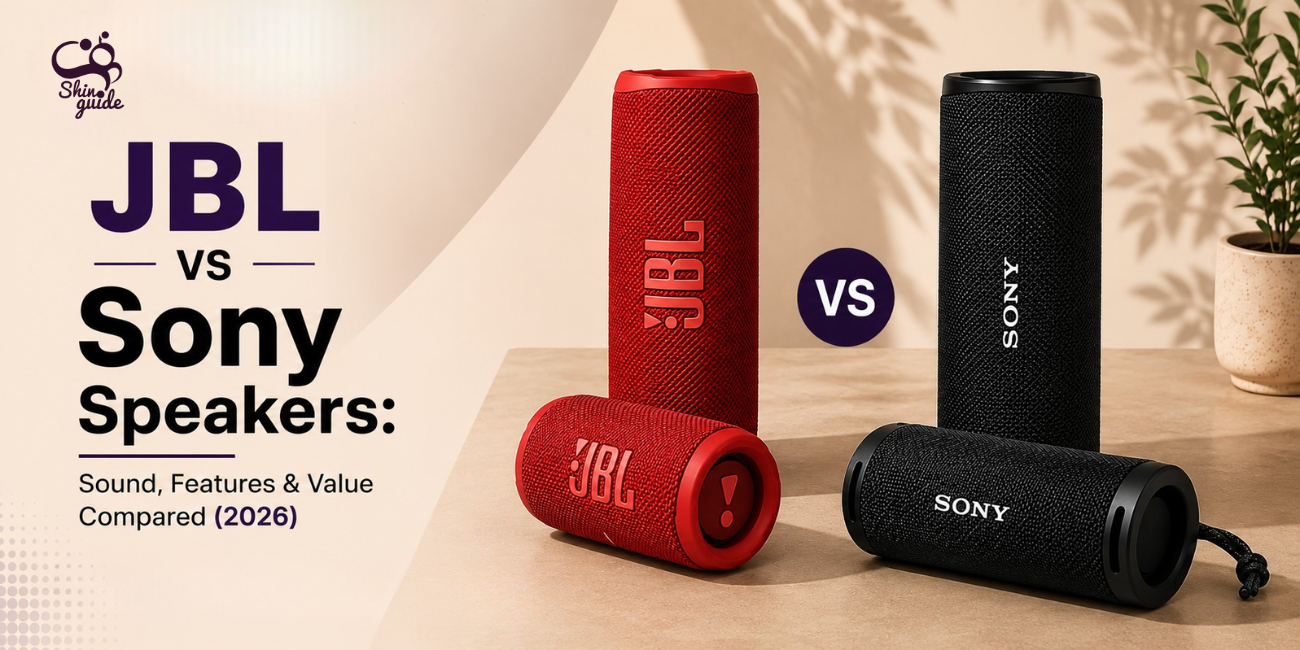
Choosing between JBL and Sony speakers isn’t just about brand loyalty it’s about how you want your music to feel. Both brands are leaders in the portable speaker market in 2026, but they tune sound very differently. JBL focuses on balanced, energetic audio with strong clarity and volume. Sony, on the other hand, leans toward warm tones and deeper bass for a more relaxed listening experience. Let’s compare them using real portable models like the JBL Flip 7 and Sony SRS-XB100.
Product Overview
The JBL Flip 7 is a rugged, travel-ready speaker designed for loud, clear, and balanced sound. It’s built for outdoor use, travel, and everyday listening where volume and clarity matter. The Sony SRS-XB100 is a compact speaker focused on warm sound and enhanced bass. It is designed more for personal listening, indoor use and relaxed environments. Both are portable and durable, but they clearly serve different listening styles.
Sound Quality & Performance
The biggest difference between JBL and Sony is how they shape sound. JBL delivers a balanced and punchy audio profile. Vocals are sharp, instruments are well separated and the overall sound feels clean and energetic without needing any adjustments. Sony creates a warmer, bass-heavy experience. The sound feels softer and more immersive, prioritizing depth over sharp detail. In simple terms, JBL sounds more precise, while Sony sounds more relaxed and atmospheric.
Bass Performance
Sony clearly focuses more on bass. The SRS-XB100 produces deeper and heavier low-end sound, making it especially enjoyable for bass-heavy music styles. JBL keeps bass tighter and more controlled. It doesn’t go as deep as Sony, but it stays clean and punchy even at higher volumes. So if you love deep bass, Sony is stronger. If you prefer balanced bass, JBL is better.
Loudness & Outdoor Use
JBL speakers generally perform better in loud environments. The Flip 7 can get louder while maintaining clarity, making it ideal for outdoor use, travel and small gatherings. Sony performs well but prioritizes sound quality over maximum volume, making it better suited for indoor or personal listening. For open spaces and parties, JBL is the better option.
Clarity & Listening Experience
JBL offers sharper vocals and better detail separation, which makes music sound more lively and defined. It works well across most genres. Sony provides a smoother and softer sound signature. While it loses a bit of sharpness, it becomes more comfortable for long listening sessions. JBL feels crisp and energetic, while Sony feels smooth and calming.
Customization & Control
JBL gives users more flexibility with EQ settings through its app, allowing sound customization based on personal preference. Sony offers fewer tuning options in this segment, focusing more on a consistent, ready-to-use sound profile.
Real-World Listening Experience
In daily use, JBL feels powerful and energetic. It’s ideal when you want your music to stand out and fill a space. Sony feels more relaxed and personal, making it better for background music or quiet indoor environments.
Final Verdict
There is no universal winner between JBL and Sony it depends on your preferences. JBL is the better all-round option. It delivers balanced sound, higher volume, and better versatility across different environments. Sony is better for users who prefer deep bass and a warm, smooth listening experience.
Simple Buying Advice
If you want a speaker that works well in almost every situation, JBL is the safer choice. If you enjoy bass-heavy music and a softer sound profile, Sony is a better match. For outdoor use and parties, JBL clearly performs better. For indoor relaxation, Sony feels more natural.
FAQs
Which sounds better, JBL or Sony?
JBL offers more balanced and clearer sound, while Sony focuses on deeper bass and warmer tones.
Which brand has better bass?
Sony generally produces stronger and deeper bass compared to JBL.
Which speaker is louder?
JBL speakers are usually louder and better suited for outdoor environments.
Is JBL or Sony better for music overall?
JBL is better for most music genres due to its balanced tuning, while Sony is better for bass-heavy and relaxed listening.
Which is better for outdoor use?
JBL is the better option because it delivers higher volume and clearer sound in open spaces.
Which is better for indoor use?
Sony works better indoors due to its warm and smooth sound signature.